An original fictional story from Little C. Mara and Jo are invented characters; this is not a patient testimonial or an account of using Little C.
Mara had moved the same blue mug three times that morning. From the table to the counter. From the counter to the sink. Then back to the counter, because the sink was full.
It was an ordinary mug having an unusually complicated day.
Her phone lit up. Jo: “I can come over for half an hour. Tea, dishes, or neither?”
Mara looked at the sink. Then at the chair.
“Dishes. But please don’t make me help.”
The visit with no performance required
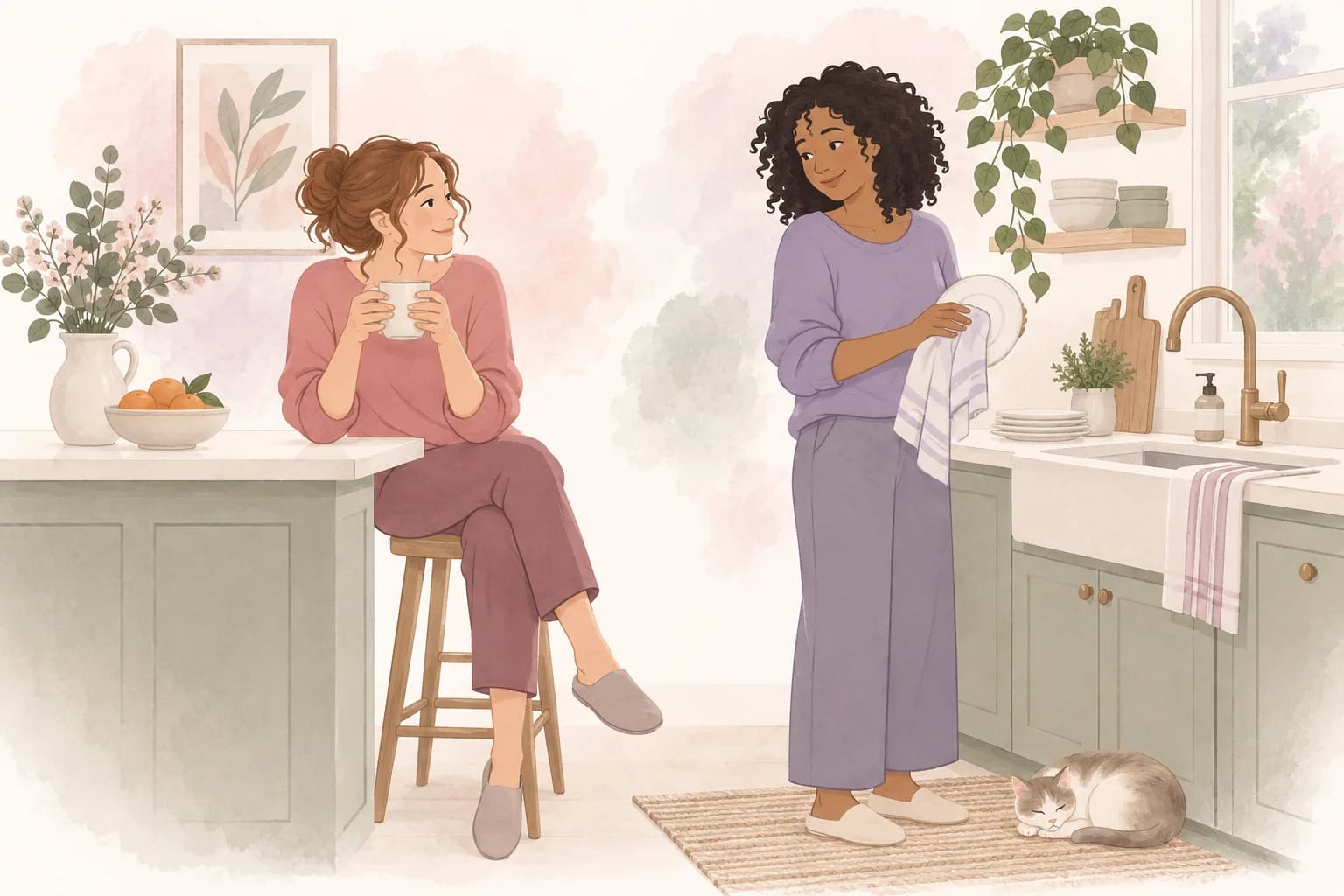
Jo arrived without a speech. She took off her shoes, put her bag by the door, and asked where Mara kept the dish towel.
“Are we talking about appointments,” she asked, “or about the terrible ending of that show?”
“The show,” Mara said immediately.
Jo had opinions. Strong ones. She directed the first of them at a saucepan while Mara sat on the kitchen stool and listened.
There was something unexpectedly restful about disagreeing with someone over fictional people. Nobody was measuring her courage. Nobody needed her to explain a report or produce an optimistic summary of the week.
For a few minutes, she was simply the person who had predicted the ending in episode two and wanted credit for it.
The question Jo did not ask
When the last plate was clean, Jo noticed a stack of envelopes beside the fruit bowl. She did not open them. She did not move them into a system of her own invention.
“Anything else you want help with?” she asked.
Mara shook her head. “Not today.”
“Okay.”
The answer stayed that size. Jo did not explain how easy it would be to sort the papers, or how much better Mara would feel afterward. She dried her hands and sat down.
Mara had been bracing for a second task: convincing her friend that one task was enough. When it did not arrive, her shoulders lowered a little.
Half an hour meant half an hour
Jo glanced at the time. “I said half an hour. I’m going to keep that promise.”
“You can stay a little longer,” Mara said. Then, after a pause: “Actually, I think I need to lie down.”
“Then I’m going.”
There was no wounded expression to soothe. No suggestion that the visit had been wasted. Jo rinsed her mug, put it on the drying rack, and asked whether another short visit later in the week would be welcome.
“Text first,” Mara said.
“Always.”
After the door closed, Mara looked at the counter. The envelopes were where she had left them. The dishes were done. Nobody had rearranged her kitchen or her afternoon.
What an ordinary kindness can hold
The next morning, Mara used the blue mug. She did not have a revelation. There was still a calendar full of things she wished were not on it. But she did not have to wash a cup before making tea.
The help had fit inside her day instead of taking it over.
This story is small on purpose. A useful offer can have a clear task, a clear finish, and room for the person receiving it to say no. Asking permission is not just a way to begin; it is something you keep doing as the visit unfolds.
If you recognize a practical need in your own life, our guide to asking for specific help has words you can adapt. And Little C’s caregiver resources can help your people find ways to show up with care. Sometimes the useful next step really is one clean mug.